
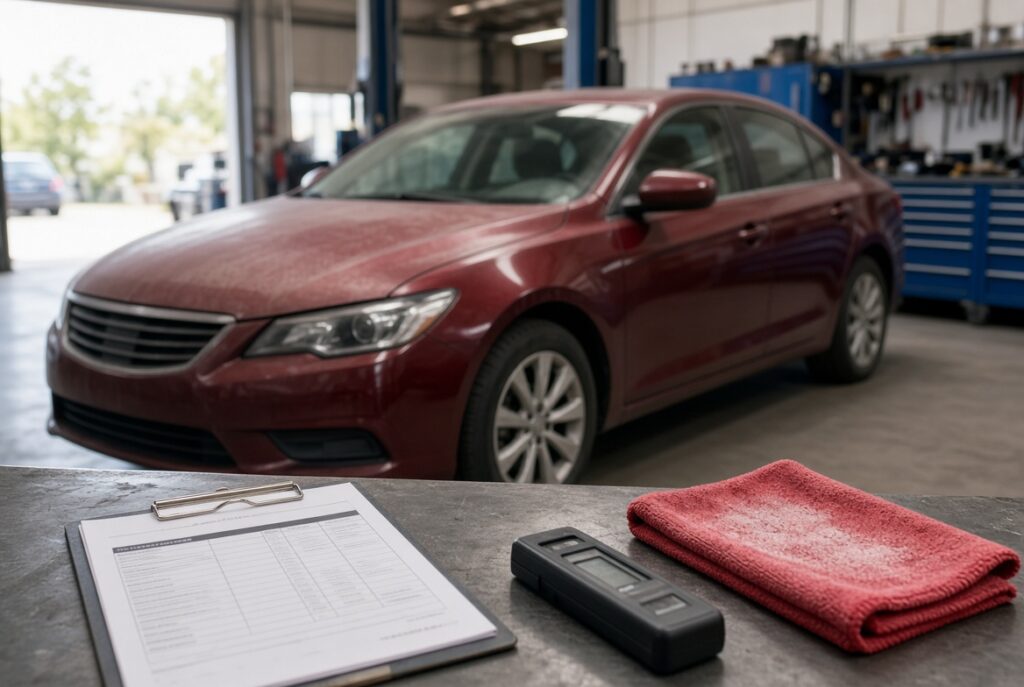
Car paint oxidation is the chalky, faded look that shows up first on hoods, roofs, and trunk lids. It is not dirt. It is the paint film itself breaking down. Drivers notice it as a loss of gloss. Shops see it as a refinish decision — correct the existing finish, replace a panel, or paint the car.
Two cars of the same year can look a decade apart. That gap is not luck. It is paint chemistry, color, climate, parking habits, and whether anyone ever put a sacrificial layer over the clearcoat.
This guide explains what car paint oxidation actually is, why some finishes last longer than others, what a 2026 repaint costs in the U.S., and the habits that slow the process down.
In this article
What Car Paint Oxidation Actually Is
Modern factory paint is a stack: e-coat on the metal, primer, color (basecoat), then a clearcoat. The color lives underneath. The clearcoat is the sacrificial layer that takes UV, heat, bird droppings, sap, and wash chemicals.
Oxidation is a chemical reaction. Ultraviolet light supplies energy. Oxygen and heat do the rest. The polymer chains in the clearcoat break apart. The film turns porous, hazy, and eventually chalky. Once the clearcoat fails, UV hits the pigment. That is when reds go pink, blues go dull, and blacks turn gray.
On older single-stage paint, there is no separate clearcoat. The pigment sits in the top layer, so fading and chalking show up sooner and look worse. For a primer on reading the vehicle before you order panels or paint, see how to read a VIN in 2026.
How to tell car paint oxidation from swirl marks
- Car paint oxidation looks dull or chalky across a whole panel, especially horizontal surfaces. A fingertip wipe often leaves a powdery residue.
- Swirl marks are fine circular scratches in the clearcoat. The color is still rich; the surface just looks scratched in the light.
- Clearcoat failure is the next stage after heavy oxidation: peeling, flaking, or a cracked texture. Polish will not save that panel.
Why Some Cars’ Paint Lasts Longer
Paint life is not one variable. It is a stack of them. That is why one neighbor’s daily driver still looks wet and another car from the same year looks chalky after two summers outside.
1. Factory paint vs. a later respray
OEM paint is baked at high temperature on a clean, e-coated shell. That heat creates a dense film that chips and weathers better than most shop resprays. A quality body shop can produce an excellent refinish. A budget single-stage spray over dirty, unsanded paint will start looking tired in a couple of summers. Original paint that has been cared for is almost always the finish you want to keep.
2. Clearcoat quality and thickness
Clearcoat is the UV shield. Thinner or cheaper clear, or a formula with weaker UV absorbers, lets photo-oxidation start earlier. Horizontal panels — hood, roof, decklid — take the most sun and fail first. That is why a car can look decent on the doors and wrecked on the roof.
3. Color chemistry
- Reds and bright oranges use pigments that absorb more of the energetic end of sunlight. Unprotected red is famous for going pink or dull orange.
- Black soaks up heat. A black hood in summer sun can run far hotter than a white one, which speeds the chemical breakdown and makes every swirl and water spot obvious.
- White, silver, and light metallic hide haze and dust longer. They still oxidize; they just stay presentable while a dark or red car already looks neglected.
- Pearls and some metallics show clearcoat haze as a milky cast long before the color itself looks faded.
4. Climate and parking
A garage-kept car in a mild climate and a daily driver parked outside in Arizona, Florida, or on the coast are living different chemical lives. UV, heat cycling, salt air, and industrial fallout all cut the same film from different angles. Shade at work matters almost as much as a garage at night.
5. Maintenance — or the lack of it
A car that is never washed, never waxed, and washed with dish soap is donating its clearcoat to the sun. Contaminants that sit — bird droppings, sap, bug guts, road salt — etch the surface and give UV a foothold. The opposite is also true: a cheaper car that gets washed correctly and sealed twice a year will outlast an expensive car that lives outside with nothing on the paint. Safe washing habits from AAA are a better starting point than a grocery-store detergent.
6. Prior collision work
A panel that was already refinished is only as good as that job. Poor prep, skipped adhesion promoter on plastic bumpers, or clear applied over contaminated paint will fail early. That is why one fender can chalk while the rest of the car still looks factory.
How Much It Costs to Repaint a Car in 2026
Repaint pricing is a range, not a number, because you are buying preparation more than you are buying color. Masking trim and spraying over oxidation is cheap. Stripping, blocking, painting jambs, and applying a proper basecoat/clearcoat system is not.
Typical U.S. shop ranges in 2026 for a same-color job on a vehicle in decent shape:
| Job | Typical range | What you are usually buying |
|---|---|---|
| Budget / chain respray | $700 – $2,200 | Limited prep, often single-stage or economy urethane. Fine for a beater. Not a long-term finish. |
| Mid-grade professional | $2,500 – $5,000 | Basecoat/clearcoat, real sanding and masking, some trim pulled. The range most daily drivers should budget. |
| High-end refinish | $5,000 – $15,000+ | Serious prep, better materials, more disassembly. The finish that can actually last. |
| Show / restoration | $15,000 – $20,000+ | Teardown, jambs, block sanding, custom or concours work. |
| Single panel (fender, door, hood) | $400 – $1,500 | Color match plus blend into the next panel. Common after a scrape. |
| Bumper cover refinish | $300 – $900 | Plastic repair and paint. Replacement plus paint is often $800 – $2,000+ with sensors. |
| Paint correction (no respray) | $300 – $1,500 | Compound and polish to remove light car paint oxidation while the clearcoat is still intact. |
SUVs and trucks run higher than compact sedans — more surface area and more time in the booth. Metallics, pearls, and three-stage whites cost more to match. A color change costs more still, because jambs, under-hood, and trunk openings have to be painted or the “new” color looks like a costume.
Bodywork is extra. Rust repair, dents, and cracked bumpers are not included in a “paint only” quote. Get that in writing. Industry refinish standards from groups such as I-CAR exist for a reason: skipped prep is how a fresh respray starts oxidizing early.
Repaint vs. replace the panel
On bolt-on parts — bumper covers, fenders, hoods, trunk lids — replacement plus paint is sometimes cheaper and cleaner than chasing failed clearcoat on a wrinkled or previously repaired panel. A used OEM panel with intact factory paint can also beat a cheap respray, because you are buying the baked factory film instead of a thin shop coat.
That is a parts decision as much as a paint decision. Compare OEM vs aftermarket vs used panels before you commit the car to the booth. If the OEM piece is priced like a second mortgage, the same logic in OEM part too expensive still applies.
When Car Paint Oxidation Can Still Be Corrected
Not every dull car needs a booth.
- Light oxidation / lost gloss: wash, clay if the paint feels rough, then polish and seal. A good detailer can often restore this.
- Moderate haze with intact clearcoat: machine compounding (paint correction), then a sealant or ceramic coating. Budget hundreds, not thousands.
- Chalking that wipes off on your hand, or clearcoat starting to peel: refinish that panel or replace it. Polishing through failing clear only makes a bald spot.
- Widespread peeling on hood and roof: plan on a multi-panel or full refinish. Spot-painting a peeling roof rarely looks right six months later.
If the refinish estimate is large enough to raise the insurance question — hail, parking-lot damage plus oxidation, or a panel already on a claim — run the numbers the same way you would after a collision. We broke that decision down in Insurance Claim vs Out of Pocket.
How to Prevent Car Paint Oxidation
You cannot stop UV. You can make the clearcoat last a lot longer. Preventing car paint oxidation is cheaper than correcting it, and much cheaper than a mid-grade respray.
Park out of the sun when you can
A garage or carport is the highest-value protection that costs nothing extra after you have it. If the car lives outside, a breathable, UV-rated cover is better than a plastic tarp that traps moisture. Shade at work during the hottest hours is worth hunting for.
Wash like you mean to keep the car
- Use a dedicated car soap, not dish detergent. Dish soap strips protection.
- Two-bucket method and a clean microfiber mitt beat a dirty brush at the coin-op bay.
- Remove bird droppings, sap, and bugs the day they land. They etch.
- Rinse salt off in winter. Salt plus sun is a fast way to haze a finish.
- Dry with a clean towel so minerals in the water do not bake into spots.
A simple maintenance calendar helps here too — the same discipline as following a car maintenance schedule by mileage, just aimed at the finish instead of the oil.
Keep a sacrificial layer on the paint
Factory clearcoat is the last line of defense, not the first.
- Carnauba wax: warm look, short life — typically 4 to 8 weeks.
- Synthetic sealant: stronger UV barrier, usually 3 to 6 months.
- Ceramic coating: bonds to the clearcoat, lasts years with maintenance washes, and is the best widely available UV buffer for a daily driver. It slows oxidation. It does not make paint immortal.
If a ceramic job is not in the budget, a basic sealant applied twice a year still beats unprotected paint by a wide margin.
Fix chips before they spread
A stone chip is a hole in the UV shield. Touch it up before rust or water undercuts the film. Small now is cheap. Peeled edges later are a panel. If the damaged piece is already discontinued, use the same order of operations as part no longer available — confirm it is truly gone, then look at interchange and used options.
Be careful with automatic washes
Soft-cloth and touchless tunnels are easier on clearcoat than worn abrasive brushes. If the car is ceramic-coated, follow the coater’s wash advice so you do not grind grit across a finish you just paid to protect.
A Practical Decision Order
A straightforward sequence helps cut through the noise:
- Decide whether the clearcoat is still intact. If it is peeling, skip polish and price refinish or a replacement panel.
- If the film is intact, get a correction quote and a single-panel paint quote. Correction is cheaper when it will actually work.
- On bolt-on parts, price a new or used panel plus paint against repairing the old one.
- If several horizontal panels are gone, budget a mid-grade or better full refinish — not the cheapest spray that will chalk again.
- After any new paint, add wax, sealant, or ceramic immediately.
Find the Panel Before You Paint the Whole Car
Car paint oxidation often concentrates on one or two panels. A hood, bumper cover, or roof can make an otherwise decent car look finished. Before you write a check for a full respray, identify the part, compare OEM, aftermarket, and used options, and see whether replacement plus a proper refinish on that piece solves it.
Search the part in plain English on PartsHaggler — “2016 Honda Civic hood” or “Ram 1500 front bumper cover” — and compare sources in one place. Shops that already use the platform for estimating can keep the vehicle in My Garage and pull refinish context from Pro. DIYers can start with the same habits in 7 ways to find auto parts faster.
For more practical auto parts articles, visit the Articles section. Body shops comparing workflow tools can also see PartsHaggler for body shops and mechanics.
Car Paint Oxidation FAQ
What is car paint oxidation?
Car paint oxidation is UV- and oxygen-driven breakdown of the clearcoat (or single-stage paint). It shows up as dull, chalky, or faded panels — usually the hood, roof, and trunk lid first.
How much does it cost to fix car paint oxidation?
Light oxidation that still has intact clearcoat is often a $300–$1,500 correction. A single oxidized panel typically runs $400–$1,500 to refinish. A mid-grade full respray in 2026 is usually $2,500–$5,000.
Can you reverse car paint oxidation at home?
You can improve light haze with wash, clay, polish, and a sealant. Once the clearcoat is peeling or the surface wipes off chalky on your hand, polish will not save it — refinish or replace the panel.
Need pricing on a faded hood, bumper cover, or fender before you commit to paint? Go to PartsHaggler.com and search the part in plain English — or with a photo of the oxidized panel.