
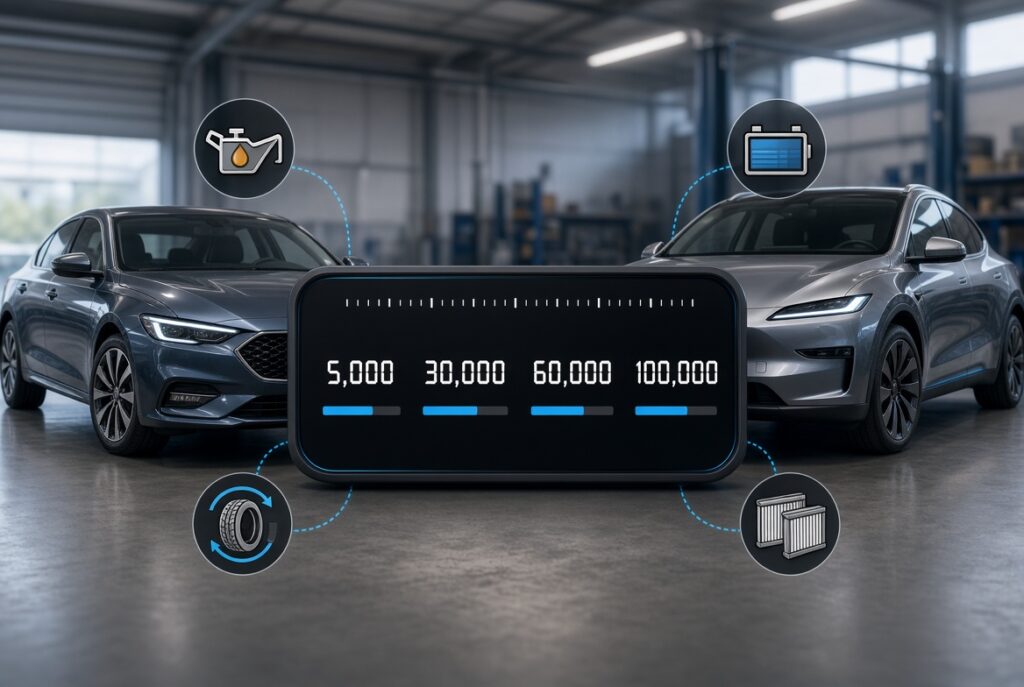
Complete Car Maintenance Schedule by Mileage (Gas & EV)
Car maintenance schedule by mileage questions come up constantly for both DIYers and shops. People want a clear, practical roadmap — what to check or replace at 5,000 miles, 30,000 miles, 60,000 miles, and beyond — without wading through overly complicated manufacturer charts.
This guide covers both gasoline vehicles and electric vehicles. The intervals below are realistic general guidelines that work for most modern cars. Always cross-check your specific owner’s manual, especially for severe driving conditions.
Why a Clear Car Maintenance Schedule by Mileage Matters
Skipping basic service is one of the fastest ways to turn a reliable vehicle into an expensive problem. A structured car maintenance schedule by mileage helps you catch issues early, extend the life of major components, and avoid the kind of high repair bills that catch most owners off guard.
Gas cars and EVs share some service needs (tires, brakes, cabin filters, 12-volt batteries) while differing sharply in others. Understanding both makes the schedule more useful.
Shared Items in a Car Maintenance Schedule by Mileage
These tasks apply to nearly every vehicle:
- Tire rotation — Every 5,000–7,500 miles. More critical on EVs because of higher weight and instant torque.
- Tire pressure — Check monthly. Directly affects safety, wear, and EV range.
- Cabin air filter — Every 15,000–30,000 miles or 1–3 years.
- Brake fluid — Every 2–4 years or roughly 30,000–48,000 miles. Moisture absorption happens regardless of powertrain.
- Brake inspection — Every 15,000 miles or annually. Pads last much longer on EVs thanks to regenerative braking.
- Wiper blades — Every 6–12 months.
- 12-volt battery — Test after year three; replace every 3–5 years. EVs still depend on a 12V battery.
Gas and Hybrid Vehicles – Mileage Schedule
Every 5,000 – 7,500 Miles
- Engine oil and oil filter
- Tire rotation
- Multi-point inspection (belts, hoses, fluid levels, leaks)
- Brake pad thickness check
Every 15,000 – 20,000 Miles
- Engine air filter (inspect and replace if dirty)
- Cabin air filter
- Spark plugs (some longer-life plugs last further)
- Battery terminal cleaning
Every 30,000 – 40,000 Miles
- Transmission fluid inspection or service
- Brake fluid flush (often recommended)
- Coolant inspection
- Fuel filter (if serviceable)
- Serpentine belt inspection
Every 60,000 Miles
- Spark plugs (if not already replaced)
- Transmission fluid and filter
- Coolant flush
- Timing belt inspection or replacement (if equipped)
- Thorough suspension and brake system inspection
Every 90,000 – 100,000 Miles
- Timing belt and water pump (common on interference engines)
- High-mileage spark plugs
- Full fluid services
- Major inspection of mounts, exhaust, and suspension
Electric Vehicles – Mileage Schedule
EVs remove oil changes, spark plugs, fuel filters, and traditional exhaust systems. The focus shifts to tires, thermal management, and the 12-volt system.
Every 5,000 – 7,500 Miles
- Tire rotation (do not skip — EVs wear tires faster)
- Tire pressure and tread inspection
- Basic multi-point inspection
Every 15,000 – 30,000 Miles
- Cabin air filter replacement
- Brake pad and rotor inspection (pads often last 70,000+ miles with regenerative braking)
- 12-volt battery health check
- Software updates as they become available
Every 30,000 – 50,000 Miles / 2–4 Years
- Brake fluid flush
- Battery thermal management coolant inspection
- Reduction gear / drive unit fluid inspection (many are long-life)
Longer intervals vary widely by manufacturer. Battery coolant can range from “lifetime” to 100,000–150,000+ miles. Drive unit fluid is often 100,000 miles or inspect-only.
Note on EV tires: Many EVs use low-rolling-resistance tires designed for range and higher vehicle weight. When replacing, choose tires rated for the vehicle’s load to protect both range and handling.
Quick Comparison: Gas vs EV
| Service Item | Gas / Hybrid | Electric Vehicle |
|---|---|---|
| Engine oil | Every 5,000–10,000 miles | Not required |
| Spark plugs | 30,000–100,000 miles | Not required |
| Tire rotation | 5,000–7,500 miles | 5,000–7,500 miles (more critical) |
| Cabin filter | 15,000–30,000 miles | 15,000–30,000 miles |
| Brake pads | 25,000–70,000 miles | Often 70,000–100,000+ miles |
| Brake fluid | 2–3 years | 2–4 years |
| Coolant | 30,000–100,000 miles | Battery thermal system (model-specific) |
Practical Tips
Keep a simple service log with date and mileage. Tracking multiple vehicles becomes much easier with a tool like My Garage.
When filters, brake parts, tires, or cabin filters are due, compare OEM, aftermarket, and used options in one place rather than jumping between sites.
EVs still require qualified technicians for high-voltage battery coolant and system work. Regenerative braking dramatically reduces pad wear, but rotors can still corrode if the mechanical brakes see little use — especially in salt-belt climates.
For additional manufacturer-specific guidance, resources from Consumer Reports can be useful when building or refining your own car maintenance schedule by mileage.
Key Takeaway
A consistent car maintenance schedule by mileage is far cheaper than repairing neglected systems. Follow the schedule that matches your powertrain, adjust for your driving conditions, and you will keep both gas and electric vehicles running reliably for years.
Related reading: OEM vs Aftermarket vs Used Parts, Part No Longer Available? What to Do Next, and 7 Ways DIYers Can Find Auto Parts Faster.
Need filters, brake parts, or tires when service is due?
Go to PartsHaggler.com and start searching — or view plans on the levels page.