
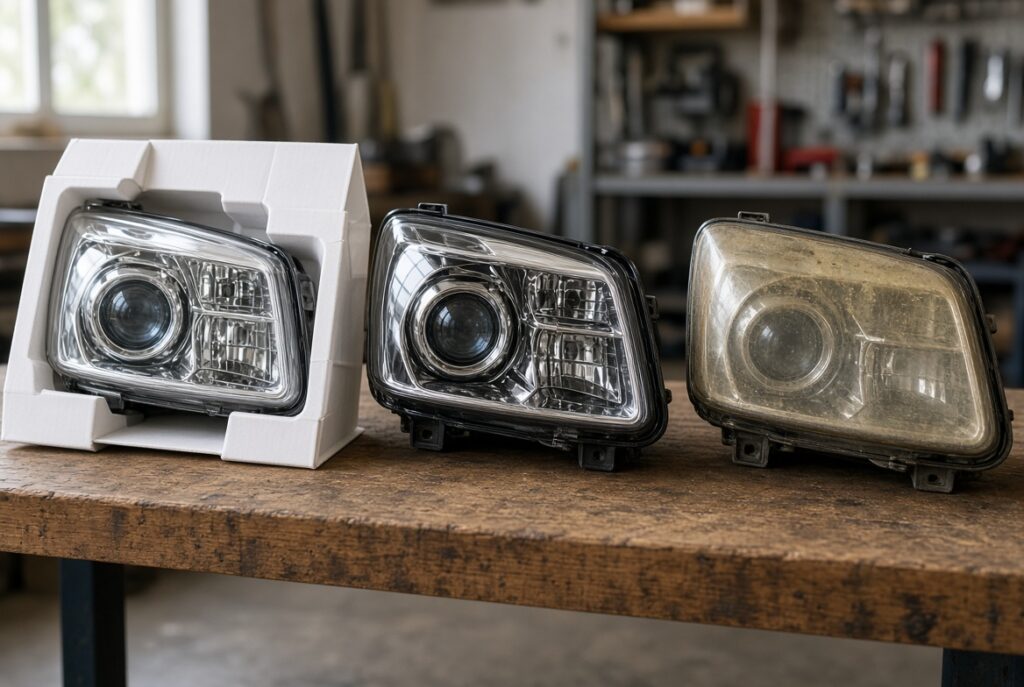
One of the biggest decisions DIYers face when buying auto parts is choosing between OEM vs aftermarket vs used parts. Each option has real advantages and trade-offs, and the best choice depends on your car, your budget, and how long you plan to keep the vehicle.
This guide breaks down the differences in plain language so you can make a smarter decision the next time you need a part.
What OEM Parts Actually Are
OEM stands for Original Equipment Manufacturer. These are parts made by (or for) the same company that built your vehicle. They are designed to match the exact specifications of the original part that came on the car.
Pros of OEM:
- Best fitment and finish in most cases
- Highest confidence in quality and durability
- Often preferred for safety-related or complex parts
Cons of OEM:
- Usually the most expensive option
- Can have longer wait times depending on the part
What Aftermarket Parts Are
Aftermarket parts are made by third-party companies. Quality varies widely — some aftermarket brands are excellent, while others cut corners.
Pros of Aftermarket:
- Generally more affordable than OEM
- Wide availability
- Some premium aftermarket brands meet or exceed OEM quality
Cons of Aftermarket:
- Quality is inconsistent across brands
- Fitment can occasionally be imperfect
- Cheaper options may not last as long
What Used / LKQ Parts Are
Used parts (often called LKQ or recycled parts) come from salvage vehicles. These can be original OEM parts that have already been on another car.
Pros of Used Parts:
- Lowest cost in most cases
- Can be genuine OEM parts at a fraction of the price
- Good option for older vehicles or non-critical components
Cons of Used Parts:
- Condition varies — you may get a part with wear or prior damage
- Limited or no warranty compared to new parts
- Availability depends on what is in salvage yards
OEM vs Aftermarket vs Used Parts: How to Decide
Here’s a practical way to choose:
- Choose OEM when the part is safety-related (brakes, airbags, steering components), when appearance matters (body panels on a newer car), or when you want maximum reliability.
- Choose quality aftermarket when you want to save money but still need good performance — especially for wear items like brakes, filters, suspension components, and many engine parts.
- Choose used/LKQ when the vehicle is older, the part is expensive new, or you’re repairing a car that doesn’t justify high parts costs.
Quick Tip
The smartest approach is often to compare all three options side-by-side for the specific part you need. Price, availability, and condition can change the decision quickly. You can explore more practical guides in our Articles section.
A Simple Decision Framework
Ask yourself these three questions:
- How important is perfect fitment and long-term reliability for this part?
- How much longer do I plan to keep this vehicle?
- Is this a safety-critical component?
Your answers will usually point clearly toward OEM, a good aftermarket brand, or a used part.
Final Thoughts
There’s no single best answer in the OEM vs aftermarket vs used parts debate. The right choice depends on the specific repair, your budget, and the value of the vehicle.
DIYers who take a few minutes to compare options — instead of defaulting to the cheapest or the most expensive — almost always end up with a better result.
You can learn more about smarter parts searching in our earlier guide: 7 Ways DIYers Can Find Auto Parts Faster.
For a deeper technical overview of OEM standards, you can also reference resources from organizations like the SAE International.
Ready to compare options for your next part? Go to PartsHaggler.com and search by description, photo, or VIN.