
How to Read a VIN in 2026 (and Why It Actually Matters)
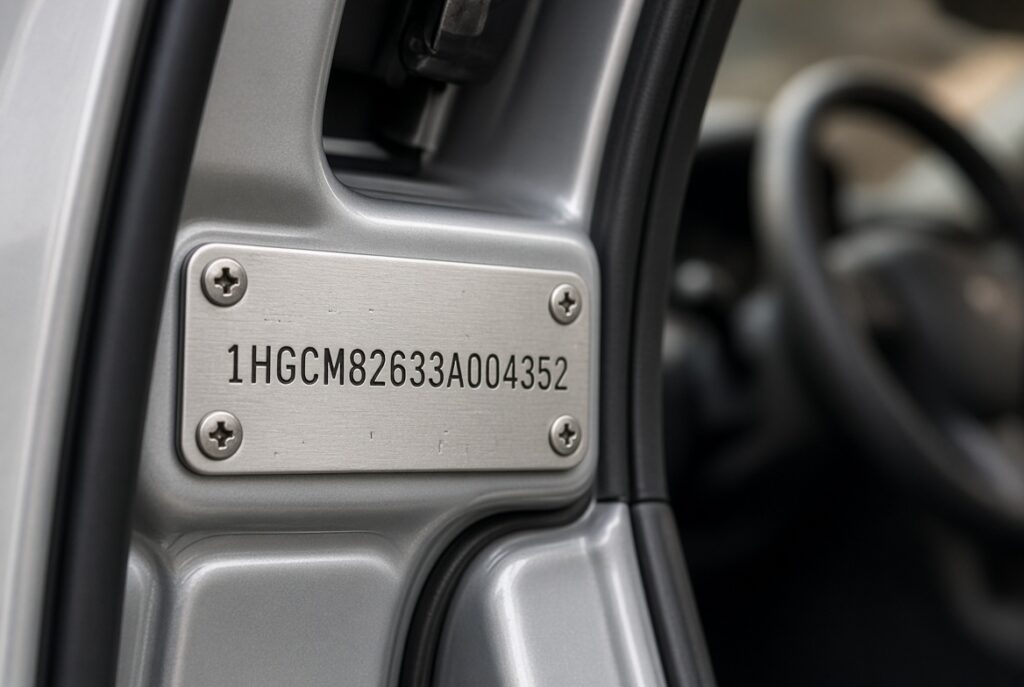
Most drivers glance at the 17-character code on their dashboard or door jamb and move on. Mechanics and parts counter staff treat it as a necessary evil. Yet learning how to read a VIN is one of the highest-leverage skills anyone who works on cars can develop. Ignore those 17 characters and you risk ordering the wrong brake pads, the wrong sensor, or the wrong body panel. Use them correctly, and you eliminate a surprising amount of waste, delay, and frustration.
A VIN is not a random serial number. It is a structured code with a clear history and purpose. Understanding that history makes the modern system far easier to use.
A Brief History of the VIN
Vehicle identification numbers first appeared in the United States in 1954. At the time there was no industry-wide standard—each manufacturer (and sometimes each division within a manufacturer) used its own format. Many early VINs were little more than sequential serial numbers.
By the mid-1960s the U.S. government began requiring more consistency. Starting in 1966, a 13-character VIN became mandatory for vehicles sold in the United States, and by 1969 the requirement covered virtually all cars on the American market. Still, the system remained relatively loose.
The modern 17-character VIN was shaped by two related international standards published by the International Organization for Standardization (ISO) in 1979 and 1980: ISO 3779 (content and structure) and ISO 3780 (World Manufacturer Identifier). In 1981 the U.S. National Highway Traffic Safety Administration adopted a stricter version of the ISO format for all on-road vehicles sold in the United States. That is the 17-character system still in use today.
The goal was straightforward: create a unique, worldwide identifier that would support recalls, theft recovery, registration, warranty tracking, and international trade. The letters I, O, and Q were deliberately excluded to avoid confusion with the numbers 1 and 0.
How VINs Differ by Country and Manufacturer
Although the 17-character length is now nearly universal, the way the characters are used is not identical everywhere.
In North America (United States and Canada), the system is more rigid. Position 9 is a mandatory check digit calculated from the other characters. This mathematical verification helps catch typing errors and altered numbers.
In Europe and many other markets that follow the pure ISO 3779 standard, position 9 is often treated as part of the vehicle descriptor rather than a true check digit. Some European manufacturers also fill unused descriptor positions with “ZZZ” or similar placeholders—something rarely seen on North American VINs.
Even within the same country, the coding of positions 4–8 (the Vehicle Descriptor Section) varies significantly by manufacturer. A Ford, a Toyota, a BMW, and a Hyundai all encode model, body style, engine, and restraint systems differently. That is why a generic year-make-model search so often fails, and why the full VIN is far more reliable.
You can review the technical background of the VIN system on the Vehicle Identification Number page on Wikipedia.
How to Read a VIN: Positions 1–3 (World Manufacturer Identifier)
These characters identify who built the vehicle and in which country or region. The first character roughly maps to geography (1, 4, or 5 for the United States; 2 for Canada; 3 for Mexico; J for Japan; W for Germany, and so on). The second and third characters narrow it to the specific manufacturer and, in many cases, the vehicle type or division.
How to Read a VIN: Positions 4–8 (Vehicle Descriptor Section)
This is where the vehicle’s attributes live—model line, body style, engine family, restraint systems, and other key features. The exact coding is manufacturer-specific, which is why a generic year-make-model search so often fails. Two vehicles that look identical on the outside can differ in critical ways that only these characters reveal.
Position 9: The Check Digit
In North America this is a calculated character (0–9 or X) that verifies the rest of the VIN is valid. In many other markets it may simply be part of the descriptor section.
Positions 10–17: Vehicle Identifier Section
Position 10 encodes the model year. Position 11 identifies the assembly plant. The final six characters form the unique production sequence number—essentially the vehicle’s individual serial number on the line.
That sequence number matters more than most people realize. Manufacturers frequently make running changes mid-year. A sensor, bracket, or module fitted in January may differ from the one used in September of the same model year. Year-make-model catalogs often cannot distinguish them. The full VIN can.
Why Learning How to Read a VIN Actually Matters
The practical consequences show up every day in shops and driveways. A 2019 Ford F-150 can be ordered with five different engines. A mid-size crossover may share a nameplate across FWD and AWD versions with different hubs, sensors, and wiring. Ordering by “2021 Camry” without the VIN is a coin flip on many parts. Industry data and shop experience both suggest that a significant share of parts returns stem from this exact gap.
There are other reasons the VIN matters beyond fitment. It is the key to accurate recall checks, title history, theft records, and insurance valuations. It is the number that appears on the title, the registration, and the manufacturer’s build records. When those documents do not match the number stamped into the vehicle, something is wrong.
Practical Tips for Using the VIN
Reading a VIN is straightforward once you know the structure. Locate it on the driver’s side dashboard (visible through the windshield) or on the driver’s door jamb sticker. Cross-check it against the title or registration. If you are ordering parts, enter the full 17 characters rather than selecting year, make, and model from dropdown menus. The difference in accuracy is substantial.
Modern search tools that begin with the VIN rather than broad vehicle categories make this process nearly automatic. They filter results to the specific configuration the vehicle actually has, reducing the chance of ordering a part that looks right on paper but will not bolt up or plug in correctly.
The Takeaway
The VIN is not glamorous. It does not appear in advertisements. Yet for anyone who buys, sells, repairs, or maintains vehicles, knowing how to read a VIN remains one of the most reliable tools available. Seventeen characters. One unique identity. Used correctly, it quietly prevents a great deal of unnecessary cost and delay.
Related reading: 7 Ways DIYers Can Find Auto Parts Faster, OEM vs Aftermarket vs Used Parts, and Part No Longer Available? What to Do Next.
Ready to put the VIN to work?
Go to PartsHaggler.com and start your next search with the full 17 characters — or view plans on the levels page.