
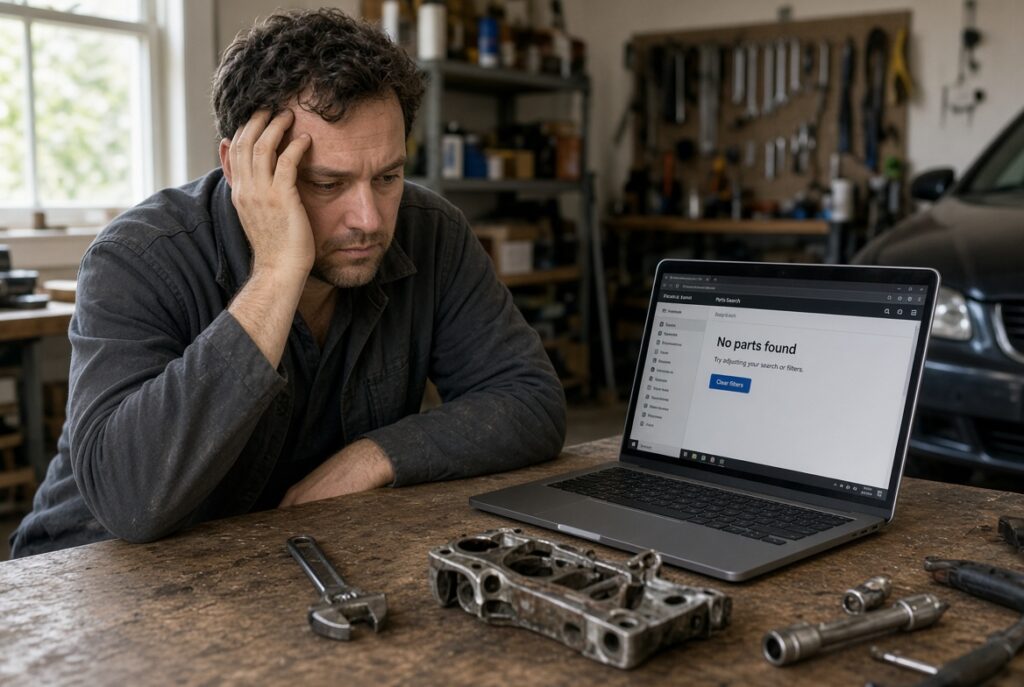
Few things slow a repair down faster than discovering the part no longer available from normal suppliers. This happens regularly with older vehicles, limited-production models, and certain body or electrical components.
When a part is discontinued or hard to find, the fastest path is usually a broader, deeper search — one that checks new, used, interchangeable, and alternative sources at the same time. This is exactly where PartsHaggler is designed to help.
1. Confirm It’s Truly Unavailable
Before changing direction, double-check availability across multiple channels:
- OEM dealer networks
- Major aftermarket suppliers
- Specialty or discontinued-parts vendors
- Salvage / LKQ networks
Sometimes a part is listed as unavailable on one site but still stocked elsewhere. Running a deep search that covers multiple sources at once is the most efficient way to confirm real availability.
2. Search by VIN and Exact Application
When a part number comes up empty, searching by VIN or full vehicle application can surface interchangeable parts you wouldn’t find by number alone. Many components share applications across model years or related platforms.
PartsHaggler supports VIN-based and natural-language search so you can quickly expand beyond a single part number.
3. Consider Quality Used / Recycled Parts
For many body panels, lights, mirrors, interior pieces, and even some mechanical components, a good used part is the most realistic solution when new stock is gone.
Look for:
- Clear photos of the actual part
- Mileage or condition notes when available
- Return policies from the salvage supplier
4. Look for Superseded or Interchangeable Part Numbers
Manufacturers often replace older part numbers with newer supersessions. A knowledgeable search or interchange approach can reveal the updated number or a compatible alternative from a related vehicle.
5. Evaluate Aftermarket Alternatives Carefully
When OEM is discontinued, some aftermarket manufacturers continue producing the part (or a close equivalent). Quality varies, so prioritize known brands and verify fitment carefully—especially on body and lighting parts.
6. Use Deep Search Before Assuming the Part Is Impossible to Find
Many “part no longer available” situations are solved by searching more broadly rather than giving up. A deep search that includes new, used, interchangeable, and alternative listings often surfaces options that single-site searches miss.
This is one of the main reasons shops and DIYers use PartsHaggler when a part is hard to find or appears discontinued.
Quick Tip
When a part is no longer available new, start with a wide deep search that includes used and interchangeable options before assuming you need expensive fabrication or a donor vehicle. More practical guides are available in our Articles section.
A Simple Decision Order
- Run a deep search across new, used, and alternative sources
- Search by VIN and application for interchangeable options
- Check quality used / LKQ inventory
- Look for superseded or updated part numbers
- Evaluate reputable aftermarket alternatives
- Consider repair or fabrication only if the above fail
Final Thoughts
Running into a part no longer available situation is frustrating, but it doesn’t have to stop the job. Most of the time a workable solution exists — you just need a broader search strategy.
PartsHaggler is built for exactly these cases: when the usual channels come up empty and you need to look deeper across multiple options in one place.
Related reading: OEM vs Aftermarket vs Used Parts and PartsHaggler for Body Shops and Mechanics.
For general information on how manufacturers manage part supersessions, industry resources such as those from SAE International can provide useful background.
Need to search across new, used, and hard-to-find options in one place? Go to PartsHaggler.com and start with the vehicle or a photo of the part.